
Why Loving Something Matters More Than Being Great at It
The Michigan Wolverines beat the UConn Huskies this week to cut down the nets and win the National Championship. One shining moment, confetti falling, ladders out at center court—the whole thing. It’s the image every kid who’s ever picked up a basketball has imagined at some point. What you don’t picture as a kid is the other side of it.
Both teams had to win five straight games just to get there. That alone is ridiculous. And after all of that—after surviving close calls, making big shots and putting together one of the best stretches of basketball of their lives—one team still walks off the court without the trophy. No ladder. No net. Just the realization that the run is over.
That’s the deal with March Madness.
For every team celebrating, there’s another one sitting in the locker room, trying to make sense of it all. Most of those players have been working toward this for years. Early mornings, late nights, empty gyms, long drives to tournaments. At some point, they all had the same thought: what if this actually happens for me? What if I win it all? What if I make it to the league? What if all of this turns into something big?
And for most of them, it won’t.
Not because they didn’t work hard enough. Not because they didn’t care. It just… doesn’t work out that way for everyone.
You can see all of that in their faces during the tournament. Every possession feels important. Every mistake stings a little more. Even the coaches look like they haven’t slept in weeks, pacing the sideline, adjusting, reacting, living and dying with every play.
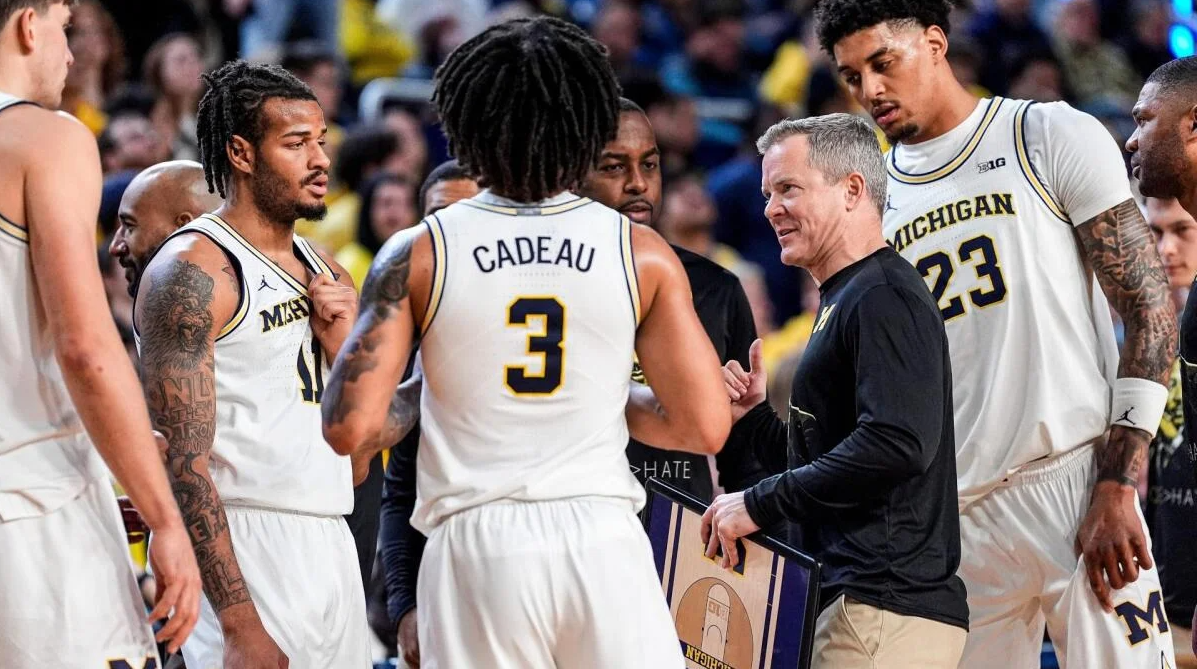
Michigan Wolverines Head Coach Dusty May huddles with his players during a timeout of the 2026 National Championship Game against the UConn Huskies. (CBSSports)
My version of basketball looked a little different.
I started playing in 5th grade at Garber Elementary. Our practices were in this small P.E. gym and our games were in a slightly bigger one with wooden bleachers. The scoreboard worked when it felt like it. Sometimes you just trusted the ref. I didn’t score much. Actually, that might be generous—I rarely scored. But I kept playing anyway. I liked it too much to stop just because I wasn’t very good yet.
What I really liked was getting a little better without even realizing it at first. A shot that used to feel awkward suddenly felt natural. A pass that used to scare me became automatic. Every once in a while, something would click, and you’d think, okay… maybe I’m getting somewhere.
At home, I’d go out to the backyard and shoot until it got too dark to see the rim clearly. Sometimes I’d lower the goal just enough to dunk, just to feel what it was like. For a few minutes, I could convince myself I was one highlight reel away from something bigger.
At the time, guys like John Wall and Derrick Rose were everything. Fast, explosive, impossible to guard. The kind of players you tried to imitate even though it never really looked the same. Neither of them ended up winning an NBA championship, which felt surprising back then. But it also didn’t change how people remember them.
Turns out, winning isn’t the only thing people hold onto.
When I got to college, basketball stayed in my life—but in a way I never expected. I joined the traveling men’s basketball band, which meant I went from being on the court to sitting just off to the side of it.
At first, that felt like a step away from what I had imagined. But then we started traveling.
Lexington. Seattle. Pittsburgh. Columbia. NCAA Tournament games, real crowds, real pressure. I got to be around players like Buddy Hield and Trae Young, watching how they prepared, how they carried themselves and how locked in they were when the moment called for it. And along the way, I realized this was my version of the dream.
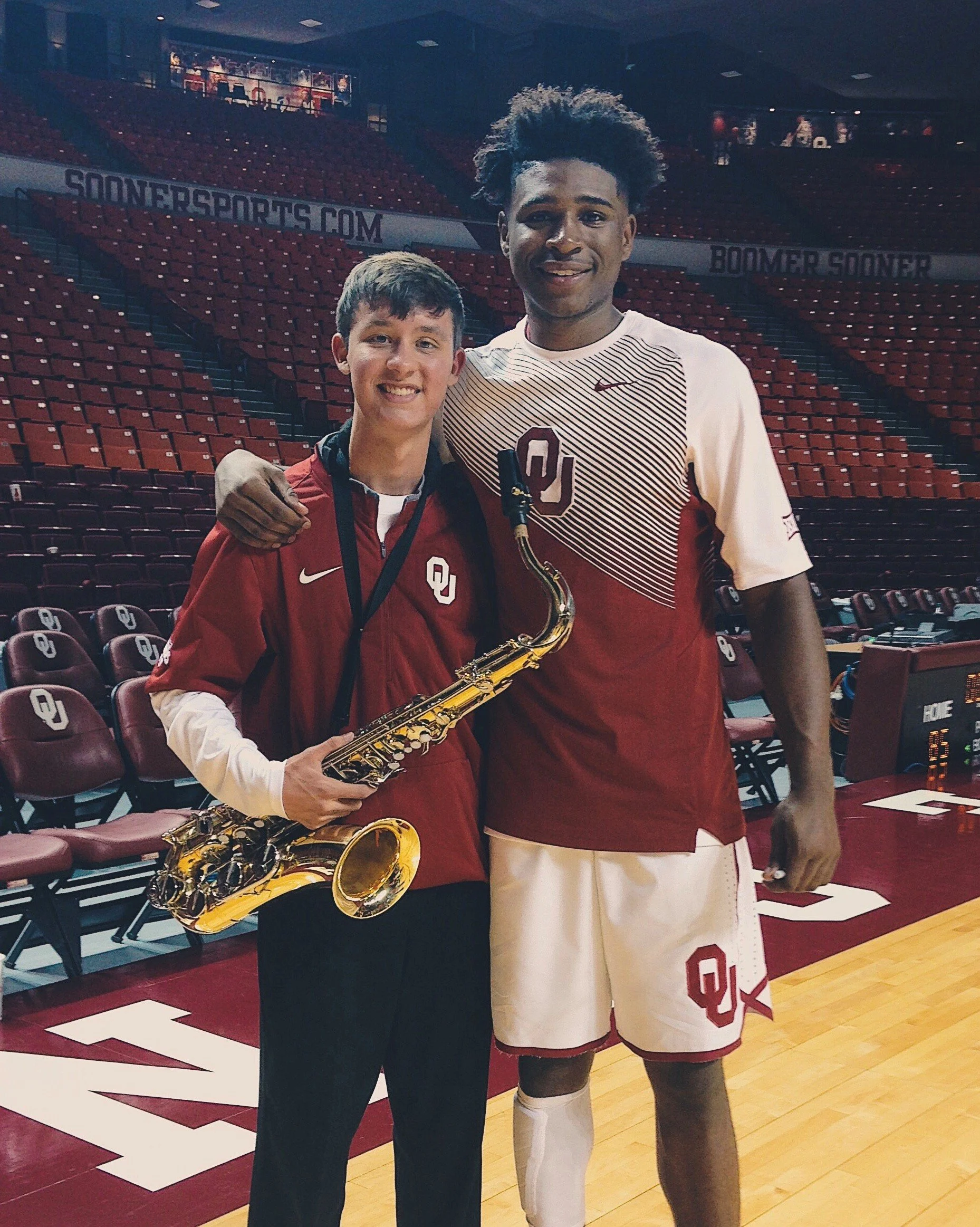
Me with OU Basketball player Rashard Odomes. (Kevin Severin)
For a long time, I thought if I wasn’t playing, I had somehow missed my shot. Like there was one version of success, and anything else meant you fell short of it. That’s a pretty limited way to look at things. There’s more than one way to stay connected to something you love.
Around that same time, I came across something from Tony Bennett, the former Virginia basketball coach. He built his program around what he called the “Five Pillars”: humility, passion, unity, servanthood and thankfulness.
Humility keeps you grounded. There’s always something to work on, no matter how good you think you are.
Passion is what gets you to show up again, even when things aren’t going your way.
Unity reminds you that it’s not just about you. It never really is.
Servanthood is all the little things nobody claps for—setting screens, making the extra pass and picking someone else up when they’re having a rough game.
And thankfulness is just stepping back and realizing—you get to do this. You get to be here.
That last one sticks with me. You get to do this. That shift in thinking changes things. It takes the pressure off needing everything to turn into something bigger and lets you actually enjoy what you’re doing while you’re doing it.
Which leads to questions I keep coming back to:
Why do we keep doing things we’re not great at? Why keep playing if you’re never going to be the best player on the court? Why keep writing if only a handful of people might read it? Why keep putting time into something that may never “pay off” in the way we’re told it should?
Some things are worth doing just because you like doing them. Not everything needs to lead somewhere. Not everything needs to turn into a win, or a job or a measurable outcome.
Sometimes it’s enough that it makes your day a little better.
I was never the best player on my team. Not even close. That didn’t stop me then, and it doesn’t stop me now.
I still play when I can. Still working on the same things, just at a different pace. The shot could always be a little smoother. The handle could always be a little tighter. There’s always something.
The difference now is that there’s no pressure tied to it. There’s something freeing about doing something with no expectation attached. No need to turn it into anything more than what it is.
Just showing up, getting a few shots up and calling it a good day.
There’s value in doing something just because you like it. Even if you’re average. Even if you’re bad at it.
March Madness shows us what it looks like at the highest level. The pressure, the talent and the stakes. But every one of those players started somewhere a lot more familiar. A driveway. A school gym. A park. They weren’t thinking about championships back then. They were just playing. And that’s the part that’s easy to forget. At some point, the game was just fun.
No expectations. No big picture. Just the sound of the ball hitting the ground and the feeling of getting a shot off before anyone could block it.
Every now and then, you step back into it. You take a shot, and it leaves your hands the same way it always has, and when it drops clean through the net, it’s familiar. In that moment, it doesn’t matter how good you are or where it’s all going, or whether any of it adds up to something larger. What matters is that you’re still finding reasons to enjoy it.
Seeing that ball swish through the net will always remind me that the simple things in our life can bring us the most joy, and I think that’s the point.