
How Friendship Changes — and Why That’s a Good Thing
The steam engine leans into the curve. The tracks bend around the gully, and when I look out from the passenger car, I can almost see straight down—just a narrow stretch of weathered planks separating me from the river carving through the canyon below. At certain turns, the rock walls press so close it feels like you could reach out and brace yourself against them. It’s equal parts thrilling and mildly concerning.
No matter how sharply we turn, no matter how steep the drop or how tight the passage, the train doesn’t hesitate. It doesn’t pause to reconsider. It just keeps moving forward, locked into the path laid out in front of it
The whistle cuts through the canyon as we approach Silverton, and I catch myself thinking how unnatural that kind of trust feels in real life. Most of us want a say in every turn. We want to know what’s next, how it ends and ideally have a backup plan in case things go sideways.
Friendships don’t really work like that.
I’ve spent a lot of time this past year thinking about friendship—how it starts, how it changes and how it somehow manages to survive things you never planned for. It’s wild how quickly someone can go from a casual acquaintance to someone you talk to almost daily. And just as wild how life can pull that same person into a completely different orbit. People move. Jobs get demanding. Someone has a kid and suddenly their schedule looks like a Tetris board on expert mode. You look up one day and realize it’s been months since you’ve had a real conversation.
There’s no single moment where it shifts. It just does. And there’s not much you can do to stop it. You can put in effort. You can reach out. But you can’t force a friendship to stay exactly how it was. Trying to usually makes it worse, like over-steering on an icy road. At some point, you either learn to roll with it or spend a lot of time frustrated that things aren’t what they used to be.
In 2025, a couple of my closest friends and I decided to head to Colorado. The original plan was simple: drive to Denver, make our way to Durango, ride a steam train and head home.
That plan lasted about a week. Suddenly we were mapping out a route across the state—Denver to Gunnison, over to Ouray, down to Durango, then out to the Great Sand Dunes. It turned into less of a trip and more of a “let’s see how much we can reasonably fit into a few days without completely falling apart.”
We started in Denver, easing into things with a hotel stay and a tour of the Coors Brewery. It felt like a soft launch into the trip—good food, familiar surroundings and catching up with an old college friend.
Then we went from that to camping in 28-degree weather in the Black Canyon of the Gunnison. No transition. No warm-up. Just straight into it.
If you’ve never tried to sleep in a tent when it’s that cold, I don’t recommend it. We eventually bailed and slept that few remaining hours in the pickup.
Zak cooked steak on a cast iron skillet like he was auditioning for a frontier cooking show. I gathered wood and tried to keep the fire alive. Matthias brewed coffee the next morning like it was a sacred ritual. It wasn’t glamorous, but it was one of those moments you know you’ll talk about for years.
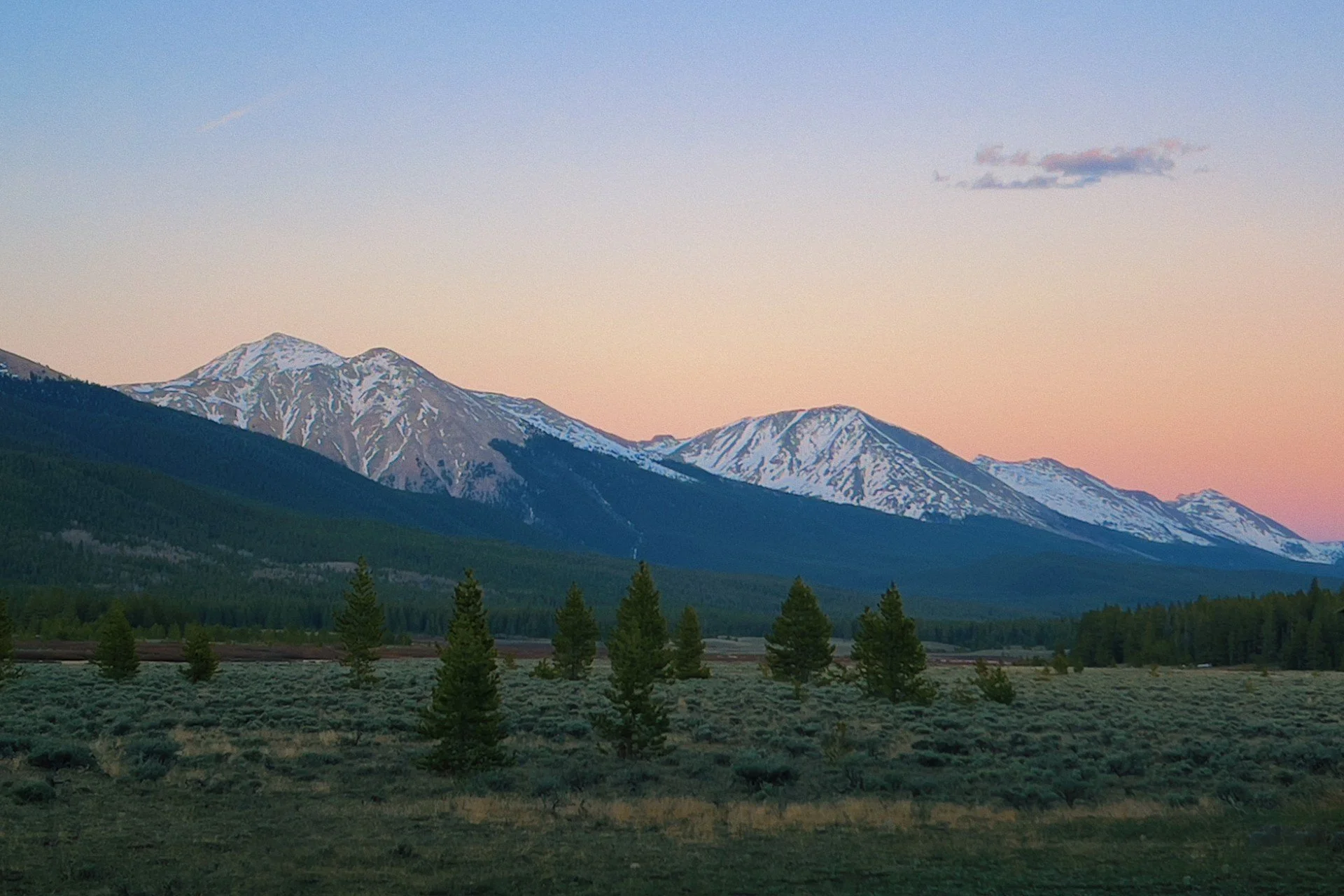
The Rocky Mountains at sunset in the Black Canyon of the Gunnison. (Kevin Severin)
From there, we made our way to Ouray, which feels like a town someone dreamed up and then forgot to make more famous. Mountains in every direction, streets that make you slow down whether you want to or not.
At one point, Zak and I ended up talking about how strange it is that no matter how much time passes, we can still fall into the same rhythm. Conversations don’t feel forced. There’s no catching up checklist. You just pick up where you left off, like no time passed at all.
That kind of consistency is easy to overlook when you’re younger. As life gets busier, it starts to stand out more.
We stayed in an RV in Durango, which felt like a luxury upgrade after the tent situation, even if it came with its own quirks. The next day, we boarded the train.
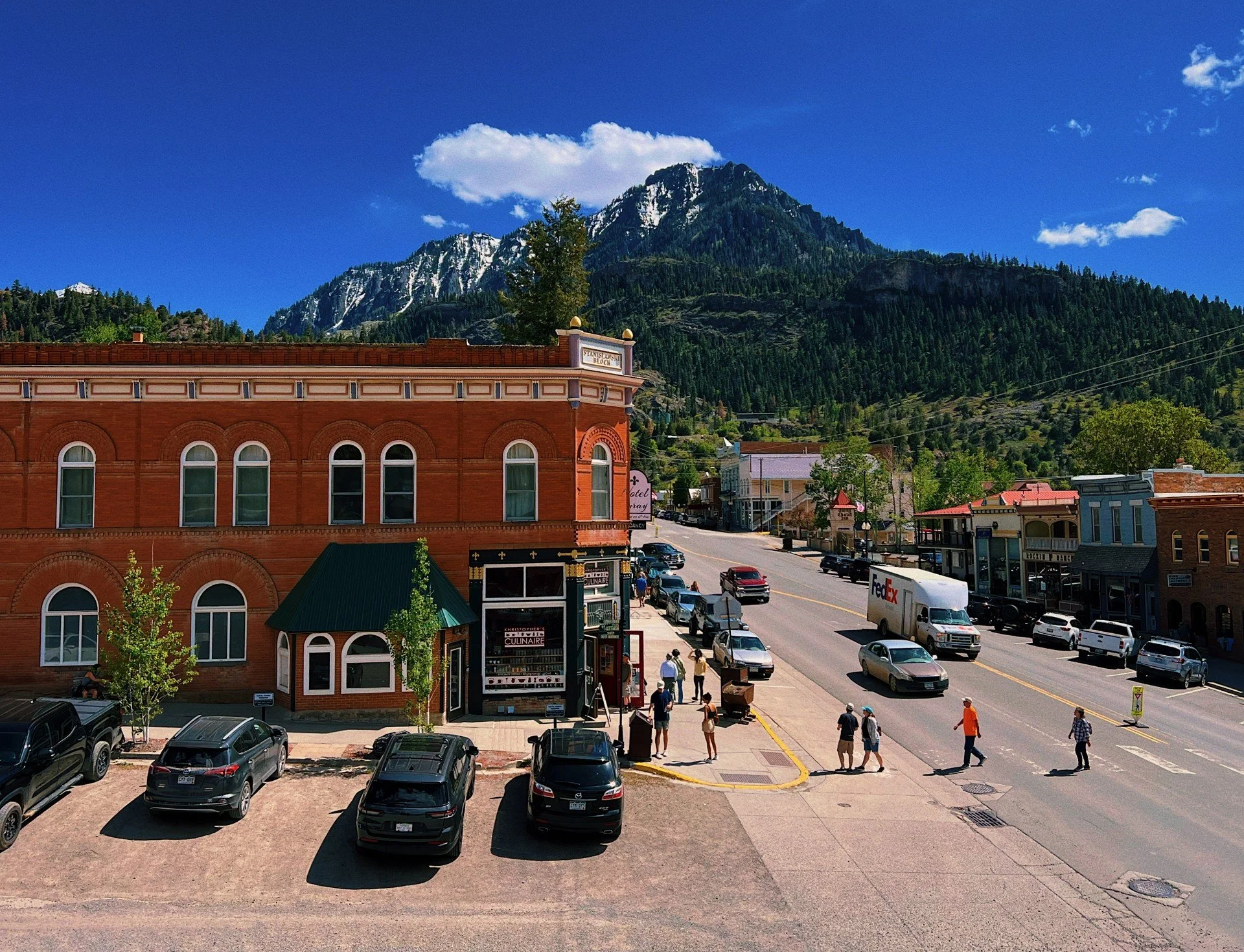
Tourists meander the streets of Ouray, Colorado. (Kevin Severin)
The Durango & Silverton Narrow Gauge Railroad dates back to the 1880s, originally built to transport silver and gold through the San Juan Mountains. It wasn’t designed for sightseeing or Instagram posts. It was built to get a job done, carving through terrain that probably made a few people question their career choices.
Over time, the purpose shifted. The mines slowed down, but the railroad stuck around. Now it carries people looking for the experience rather than the resources. Same track. Different reason.
Friendships aren’t static. They don’t exist in one fixed version. They change depending on where you are in life, what you’re dealing with, what you need, and what you’re able to give. Sometimes you see a friend every week. Other times it’s a couple times a year, and somehow it still works. The structure stays, but the purpose evolves.
One of the best parts of the trip was how different we all are, and how well that actually worked in practice. Matthias is the kind of person who hears “this might be a bad idea” and takes it as a light suggestion. He’s always up for something new, something slightly uncomfortable, something that makes the story better later. Zak has a way of fully locking into wherever he is. He’s not rushing to the next thing or trying to optimize every second. He just experiences it. Views, conversations, random stops—he gives them his full attention. And I tend to be the one trying to document everything. Photos, videos and mental notes of things I don’t want to forget. It’s probably excessive at times, but I like knowing we’ll have something to look back on when the details start to blur. Put all of that together, and it balances out.
You start to see things differently. You try stuff you wouldn’t normally try. You slow down in places where you’d usually rush through. Or you speed up when you’d otherwise overthink it. Not every trip works like that.
I’ve been on trips where something as small as breakfast plans turned into a full-blown disagreement. It doesn’t take much. Lack of sleep, different expectations or someone who needs coffee immediately versus someone who thinks “we’ll find something eventually” is a solid plan—that’s all it takes. But when it clicks, it really clicks. You come back with more than just photos. You come back understanding each other a little better.
Zak had been talking about riding the train in Durango for a long time. At one point, he was just going to go by himself. And honestly, that would’ve made sense. It’s the kind of thing you can do solo and still enjoy. But he decided to turn it into something shared. That changed the whole trip. It wasn’t just about getting on a train and seeing the views. It became a reason to spend time together, to step out of our normal routines and do something intentional.
There’s something underrated about inviting people into experiences like that. Not just the big, once-in-a-lifetime trips, but even the smaller things. It shifts the dynamic from “we should hang out sometime” to actually making something happen.
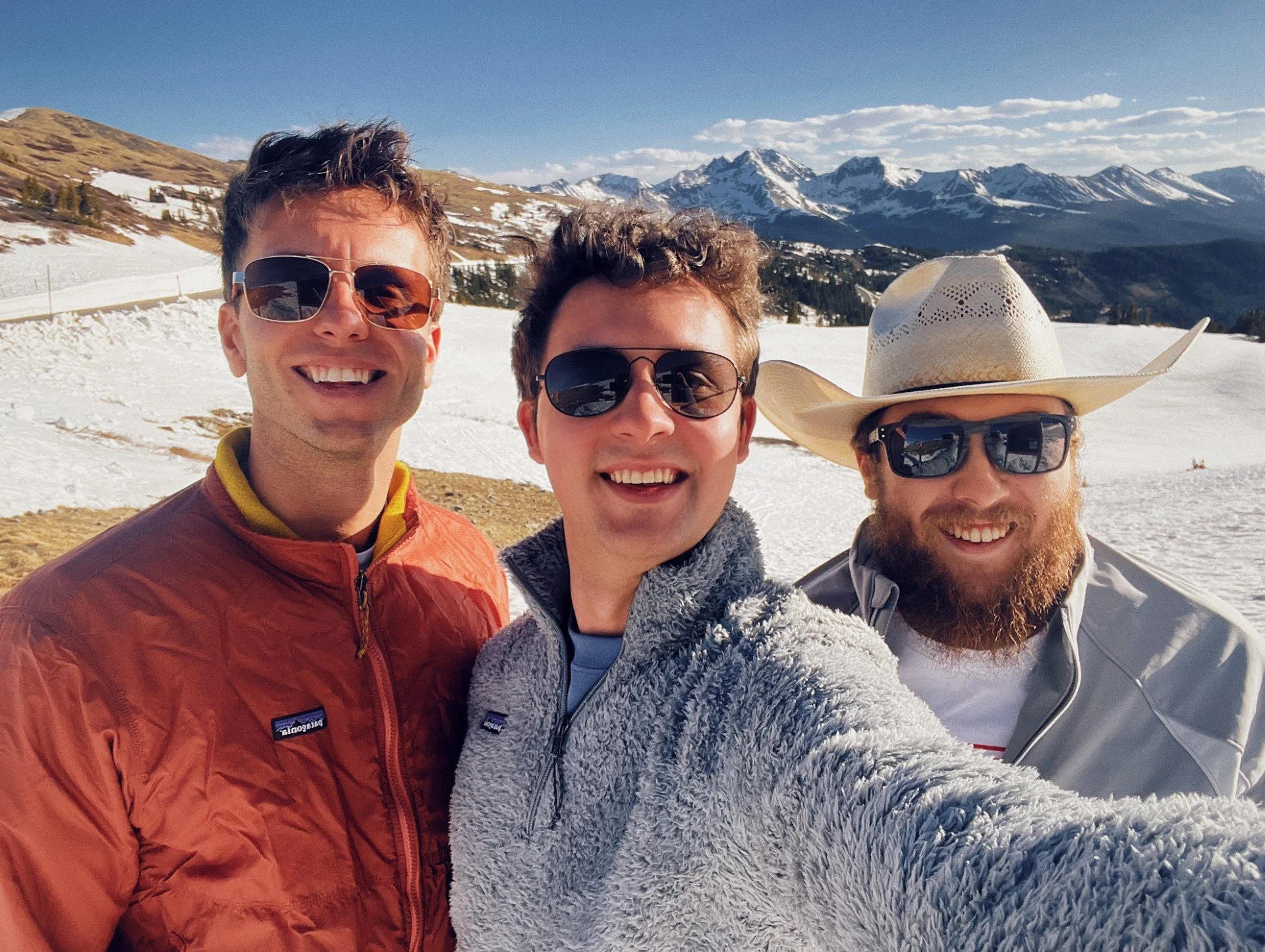
Matthias, me and Zak pictured together in the Rocky Mountains. (Kevin Severin)
Our last stop was the Great Sand Dunes, which somehow feel out of place and exactly right at the same time. You go from mountains to what looks like a desert dropped in the middle of Colorado.
Looking back, the details of each stop blur together a bit. What stands out more is the feeling of moving through it all together. Not everything went perfectly. We were cold, tired, occasionally hungry and at least once slightly lost. Standard trip stuff. But none of that really mattered.
The train didn’t stop to question the track. It didn’t try to reroute itself halfway through. It just kept going, trusting that it would end up where it was supposed to. Friendships feel a lot like that. You don’t get to control every turn. People change. Life shifts. Timing gets weird. You lose touch for a while, then reconnect like nothing happened.
If you try to control all of it, you’ll probably end up frustrated. If you let it unfold, you might end up somewhere better than you expected.
Somewhere along the way, you realize it’s not about keeping things exactly the same. It’s about staying open to what they can become. And if you’re lucky, you look around at some point—on a train, in the middle of nowhere, or just back home—and realize you’re still surrounded by people who chose to be there.
No map needed.