
The Cuft of Wood: How Lore Begins
We were on our way to a weekend cabin trip when we pulled over to buy firewood from one of those roadside stands that somehow operates entirely on the honor system. There was no cashier, no building, just stacks of bundled wood and a weathered sign.
1 CUFT OF WOOD — $10
I had absolutely no idea what a cuft of wood was. It sounded official enough, so I tossed $20 into the metal cash box, grabbed two bundles, loaded them into the car and we kept driving. From that day forward, I never bought a bundle of firewood again. I bought a cuft of wood.
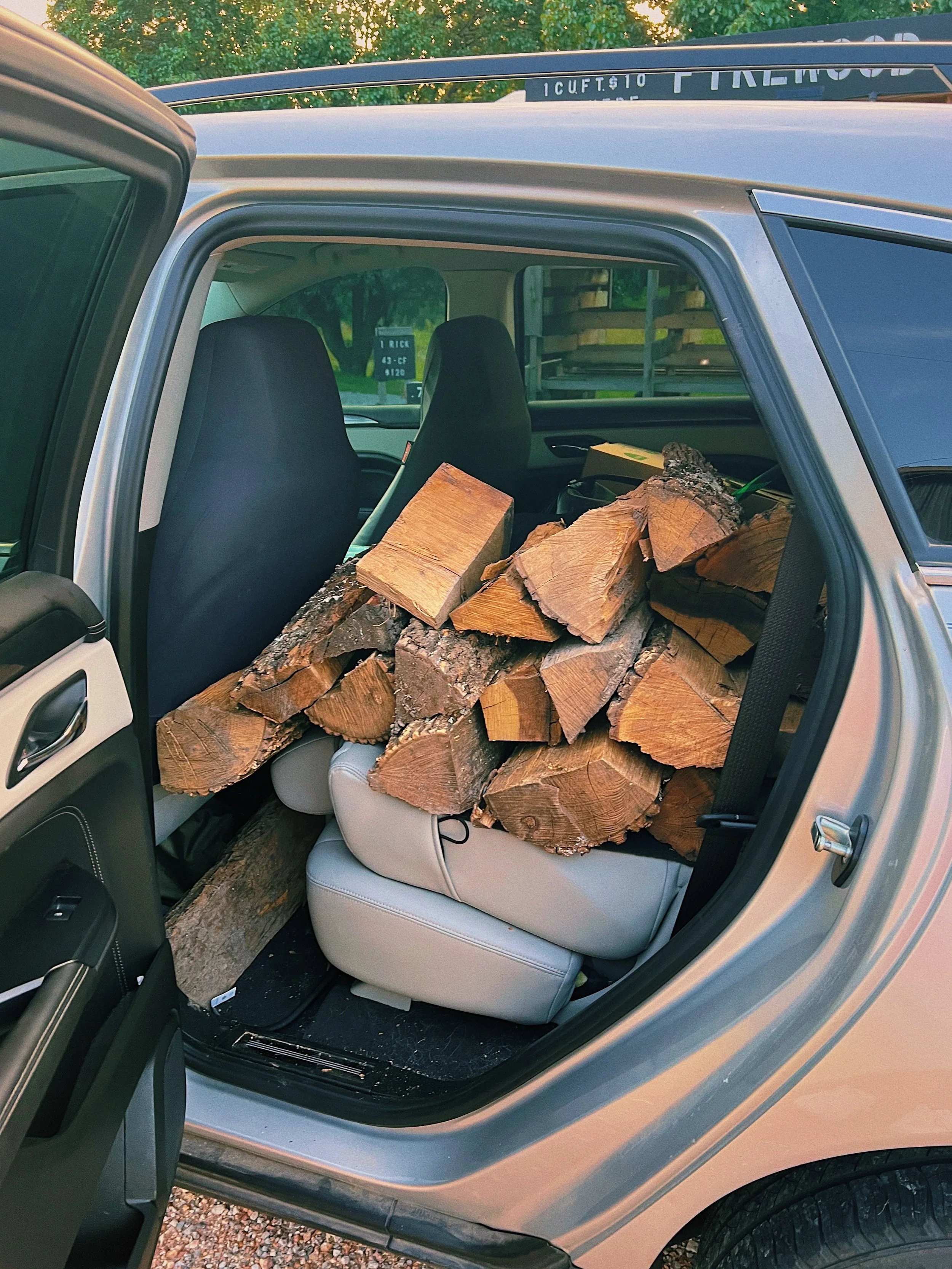
Our car packed with two cufts of firewood on the way to our cabin at Grand Lake, Oklahoma. (Kevin Severin)
"Grab me a cuft."
"We'll need at least three cufts."
"That's barely half a cuft."
No one ever questioned it. No one corrected me. The word just entered my vocabulary and naturally, it became real. That's how lore works.
I don't think friend groups realize they're inventing mythology while they're living it. It never feels significant at the time. Someone says something wrong. Someone trips over a sentence. Somebody gives a place a nickname that makes no sense. Everyone laughs. Then somebody repeats it next weekend. Then next month. Five years later, you're still saying it and anyone outside your circle has absolutely no clue what you're talking about. An inside joke graduates into folklore.
I've accumulated a surprising amount of lore over the years, most of it during college. Looking back, it's funny how little of it revolves around major milestones. Graduation and winning awards aren’t lore. Those things are important, but they already have names and ceremonies attached to them. Lore grows in the margins. It's built from mispronounced words, songs that always summon the same people, restaurants that become landmarks in your personal history and stories that improve just a little every time someone tells them.
History records what happened. Lore records what mattered.
The details blur. Facts get smoothed over. Certain moments become funnier than they probably were. People start assigning meaning to ordinary objects. A booth at a restaurant becomes “our booth.” A parking lot becomes “the place where...” A random phrase becomes shorthand for an entire weekend.
I watched Christopher Nolan's The Odyssey recently, and it got me thinking about mythology. We tend to imagine myths as stories that arrived fully formed, carved into marble somewhere. In reality, they probably started the same way ours do. Somebody experienced something worth retelling. Then another person repeated it. Each version sanded off a few edges and exaggerated a few others until the story became larger than the event itself.
Mythology doesn't begin feeling mythical. It begins with someone deciding, “You have to hear what happened.”
My own lore can probably be summed up by three things: a word, an event and a place.
What's funny is that words are the easiest pieces of lore to keep alive. They're portable and sneak into conversations when you least expect them. One sentence can transport you back years without anyone else in the room realizing it.
A cuft stopped being a measurement almost immediately. It became a unit for anything that came bundled together. It became an adjective and sometimes it became a verb. At this point I'm not even convinced I always use it grammatically, but grammar surrendered long ago.
The best part is watching someone new hear it for the first time. They usually nod as though they've somehow missed an entire branch of the English language.
The second piece of lore is less portable but even stronger.
In 2015, I traveled with the Pride of Oklahoma Marching Band to the Orange Bowl in Miami. A few nights before the game, the directors organized a dinner cruise around the harbor. Hundreds of college students were packed onto a three-story yacht. Then Pitbull's “Fireball” came on and my friend Cody started a conga line.
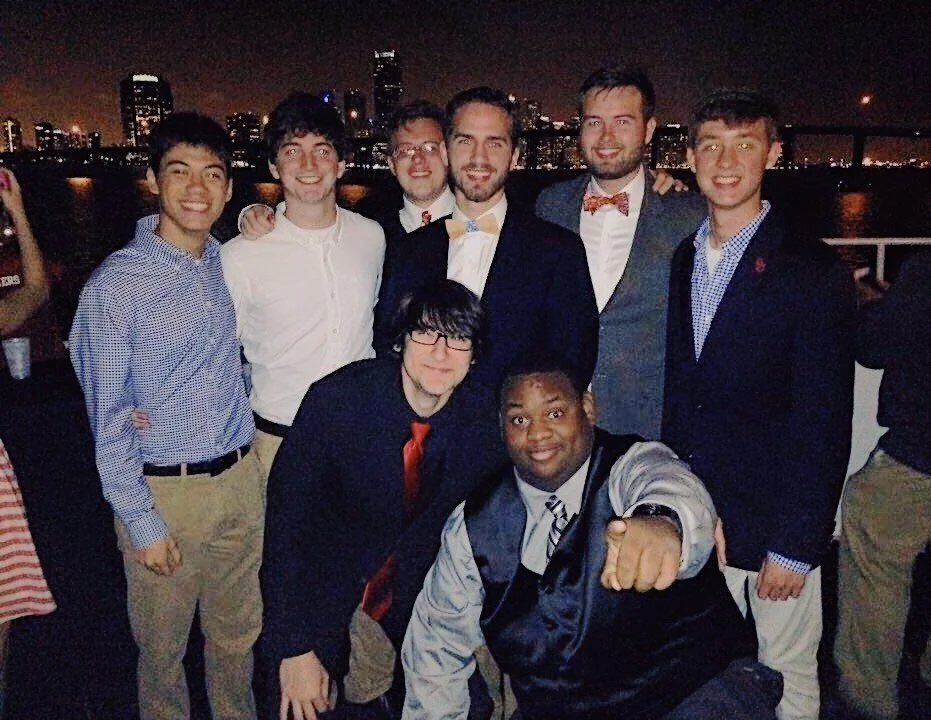
Me and my bandmates on a dinner cruise in Miami, Florida, while attending the 2015 Orange Bowl. (Kevin Severin)
What began with a handful of people swallowed the entire boat. The line stretched through three decks, weaving between tables and staircases while everyone shouted the lyrics with much confidence. Objectively, it lasted a few minutes, but in memory, it lasted an entire evening. Ever since then, that song has become less of a song and more of a bat signal.
Wedding? Conga line. Alumni reunion? Conga line. Random bar that decided to play “Fireball” at 10:47 p.m.? Conga line.
It doesn't matter how many years have passed. The second those opening notes start, everyone who was there finds each other almost by instinct. We just fall into line like no time has passed at all.
The conga line isn't really about Pitbull anymore — it's about Miami, and college and about being twenty years old and believing every trip deserved its own soundtrack.
Then there's The Mont, and if you've lived in Norman for long enough, odds are you've accumulated at least one story there.
The Mont has hosted birthdays, game days, reunions, first dates, last dinners before graduation, celebrations, heartbreaks, and enough Sooner Swirls to qualify as a campus utility. It also hands out tiny plastic palm tree drink stirrers. For reasons I still can't fully explain, I decided I was going to collect every color. It took me eleven years. Eleven years for a handful of tiny plastic palm trees.
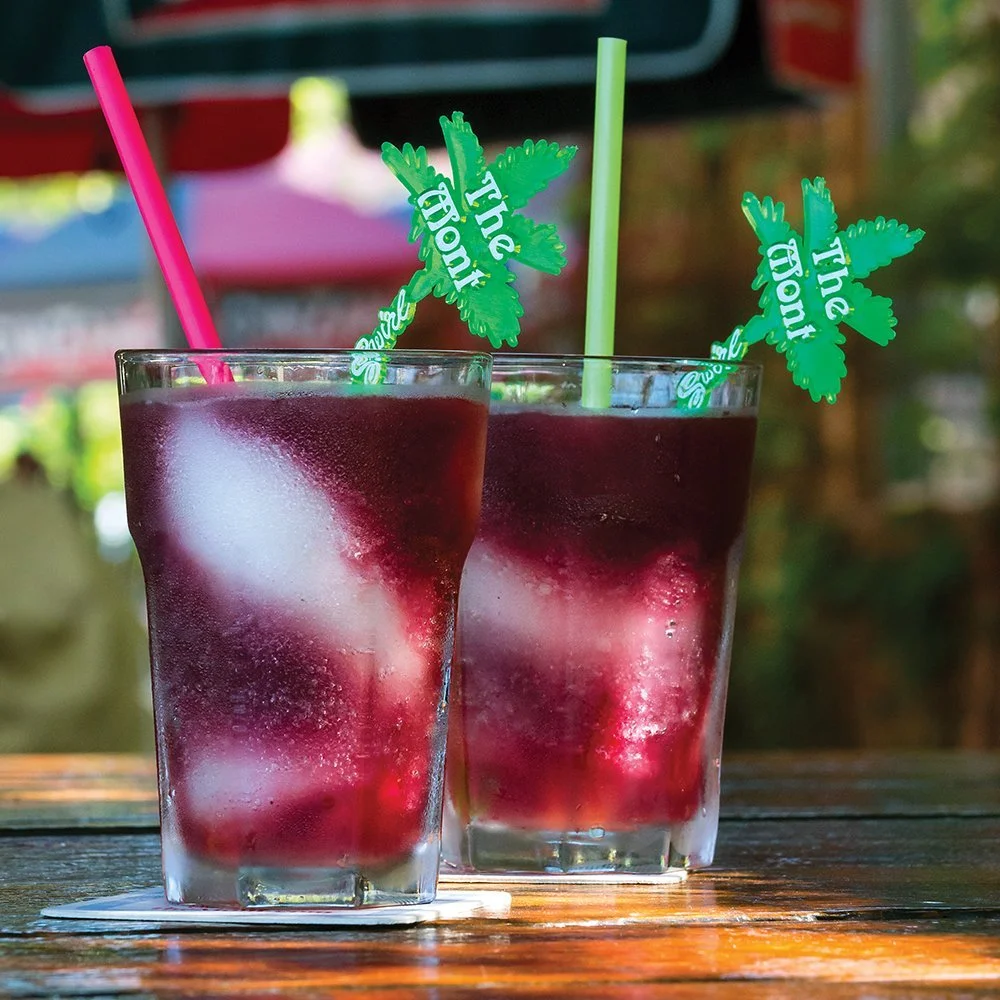
Two iconic Sooner Swirls at the Mont in Norman, Oklahoma. (405 Magazine)
I celebrated my twenty-first birthday at The Mont. My Greek service organization met there almost every week. Friends gathered there after exams, before football games and on random Tuesdays when nobody wanted to cook. We've signed one of the books sitting in the restaurant library every time we've gone back. At some point, I convinced my friends that taking celebratory shots in the bathroom was a perfectly reasonable tradition.
I don't visit nearly as often anymore, but every time someone comes to Norman for the first time, the Mont is still the first place I think to take them.
That's the interesting thing about lore. It carries history that only my friends and I can see. Every friend group develops its own language, its own relics. and its own sacred places.
Outsiders don't understand why a random song causes thirty adults to form a conga line. They don't understand why a plastic palm tree deserves shelf space. They definitely don't understand why someone keeps talking about a cuft of wood as though it's common knowledge.
The more personal these stories become, the less they need to make sense to anyone else, and that's what gives them their value.
There's a quote I love: The less real you make something, the more real it becomes.
And I think that's true. Lore begins as pretending. Then it becomes tradition, and eventually it becomes belonging.
After enough years, the object itself matters less than the people who keep giving it life. The stories outgrow the moments that created them. A restaurant becomes a time capsule. A song becomes a reunion. A nonsense word becomes part of your vocabulary.
And on a random summer evening, a cubic foot of firewood stops being a measurement. It becomes a cuft.