
Some Things Are Worth Saving
In the summer of 2023, I stood inside the Lincoln Memorial in Washington, D.C. Like everyone else, I spent a few minutes looking up at the enormous statue before my eyes wandered to the inscription above it. Carved into the stone were the words: “In this temple as in the hearts of the people for whom he saved the Union, the memory of Abraham Lincoln is enshrined forever.”
It was the phrase “saved the Union.” That single word – saved – carries an enormous amount of weight. It assumes something existed that was worth keeping, and it suggests that history is shaped by those who refuse to let valuable things disappear.
I've thought about those words more often than I expected. As America prepares to celebrate 250 years as a nation, they feel less like a description of history and more like a question for the present: What in your life is worth saving, and what kind of person must you become to save it?
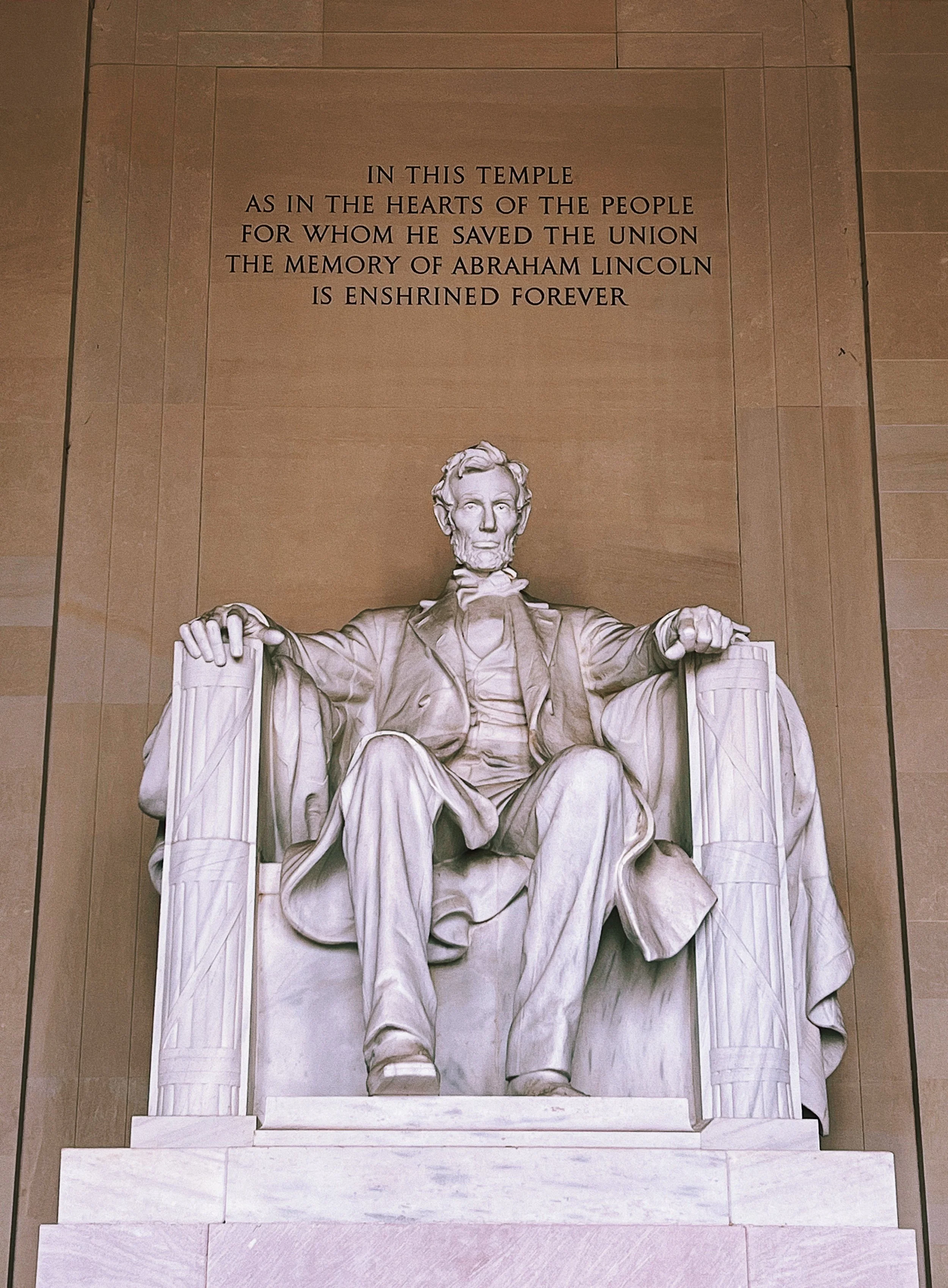
The marble statue of Abraham Lincoln sits enshrined within his memorial on the National Mall in Washington, D.C. (Kevin Severin)
It's easy to forget how fragile the United States looked in 1861.
When Abraham Lincoln took the oath of office, seven Southern states had already declared they were leaving the Union, and others were considering it. The Civil War wasn't a political talking point or an overblown headline designed to get clicks. It had become reality.
Lincoln inherited a nation that was already coming apart, and I think we often flatten history into something predictable. We know how the story ends, so we assume everyone living through it knew the ending too. They didn't.
There was no guarantee the United States would survive. Countries have disappeared before, empires have collapsed and constitutions have failed. The Union could have become another one of those stories, and that perspective changes the way I think about Lincoln.
I don't see him as some flawless giant carved in marble. I see him as a man who was asked to carry an impossible burden at the exact moment his country needed someone willing to try. He wasn't perfect, and his presidency included decisions that historians still debate today. In some ways, that's what makes him so compelling. Great leadership rarely belongs to perfect people. It belongs to imperfect people who are willing to shoulder extraordinary responsibility.
Donald Phillips writes in Lincoln on Leadership that Lincoln spent far more time listening than talking. He welcomed ordinary citizens into the White House, visited soldiers instead of managing the war from a comfortable distance and consistently gathered perspectives from people who disagreed with him. He believed leadership was about learning constantly, remaining curious and refusing to become isolated from the people he served.
One story from Lincoln's life has always fascinated me. Whenever someone made him furious, he often wrote long letters expressing every ounce of frustration he felt. Then he folded the letter and never mailed it.
Imagine that level of emotional discipline in the age of social media?
Lincoln understood something most of us eventually learn the hard way: anger makes an excellent first draft but a terrible final decision. His restraint was wisdom, and it allowed him to lead without letting every passing emotion determine his next move.
He also refused to make promises he couldn't keep. Lincoln rarely pretended victory would come easily, and he acknowledged hardship while continuing to move forward. People need leaders who are honest about reality without surrendering hope.
Lincoln had every reason to quit long before he reached the White House. He lost elections, experienced business failures, endured profound personal tragedy and then found himself leading a nation through the bloodiest conflict in American history. The weight of that responsibility would have crushed most people, yet he continued showing up day after day.
One of Lincoln's greatest qualities appeared near the end of the Civil War. After four years of unimaginable destruction, he wasn't consumed by revenge. His Second Inaugural Address closed with the words, "With malice toward none, with charity for all."
Think about what it would have taken to say that. Hundreds of thousands had died, families had been torn apart and the country had endured suffering on a scale that's difficult to comprehend. Yet Lincoln looked toward reconciliation instead of retaliation. He understood that saving the Union meant more than winning the war. It meant preserving the possibility that one country could emerge from the conflict.
During that same trip to Washington, I walked through the United States Capitol and stood beneath the Rotunda. Standing there, I realized none of it was inevitable. The Capitol, the Constitution, the traditions and the institutions that have shaped this country didn't survive on autopilot for nearly two and a half centuries. They endured because generation after generation decided they were worth preserving.
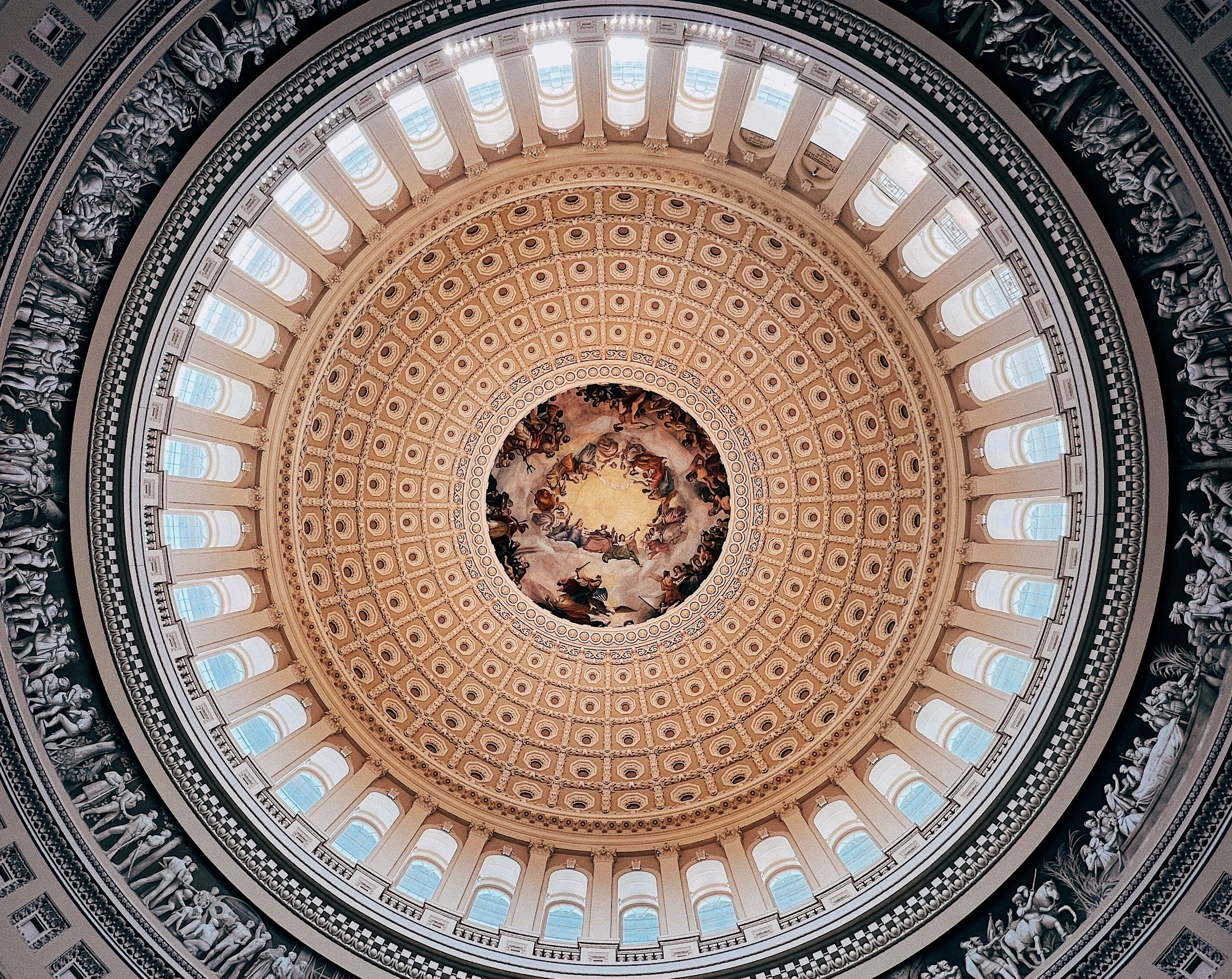
Standing beneath the dome of the U.S. Capitol Rotunda. (Kevin Severin)
We often speak about history as though progress naturally moves forward, but every generation inherits something it didn't build, and every generation decides what happens next.
About a month ago, I visited Hildene in Vermont, the summer home built by Lincoln's son, Robert. I expected something grand and intimidating. Surely the family of one of America's most famous presidents lived surrounded by extravagance.
Instead, I found something elegant without feeling excessive. The estate reflected a family that seemed more interested in responsibility than spectacle, and I found myself thinking that greatness often leaves behind surprisingly ordinary footprints.

A view of Lincoln’s summer estate, framed by the gardens at Hildene in Vermont. (Kevin Severin)
That brings me back to the question I've been carrying since I stood inside the Lincoln Memorial. What is worth saving today?
For some people, it's a marriage that's become difficult. For others, it's a friendship that deserves one more honest conversation, a church that's shaped generations, a neighborhood where people still know each other's names or the traditions that hold a family together. Character, integrity, trust and community all require far more maintenance than we like to admit.
Not everything deserves endless effort. Some things truly should end, and wisdom includes recognizing when it's time to let go. But we've also developed a habit of replacing things before we've seriously considered repairing them. We celebrate starting over, yet we don't spend nearly enough time talking about the courage it takes to stay and preserve something that's still worth having.
Theodore Roosevelt once warned that nations are rarely lost all at once. More often, they erode when comfort becomes more important than duty. He wrote, “The things that will destroy America are prosperity-at-any-price, peace-at-any-price, safety-first instead of duty-first, the love of soft living and the get-rich-quick theory of life.”
History celebrates builders, inventors, founders and pioneers, and it should. Their work changed the world. But preservation deserves admiration too. Sometimes leadership means creating something entirely new. Other times it means protecting something valuable from disappearing.
Parents do it every day. Teachers do it every school year. Friends do it during difficult seasons. Communities do it after storms. Those stories rarely become headlines, but they remain acts of leadership all the same.
As America approaches its 250th birthday, we'll spend plenty of time reflecting on the country's founding. We'll celebrate extraordinary accomplishments and remarkable people, and that's appropriate. But anniversaries also invite us to ask a different set of questions. What have we inherited? What deserves our care? What would future generations thank us for preserving?
Whenever I think about those questions, my mind returns to the Lincoln Memorial and to the inscription carved into the stone above Lincoln's statue. History remembers him not simply for holding the nation's highest office, but for believing the Union was worth preserving and acting on that conviction when the cost was unimaginably high.
Most of us will never be asked to preserve a nation, but all of us have something entrusted to our care. It could be a family, a friendship, a reputation, a community or a calling. The real question is whether you'll recognize something’s value before it's gone, and whether you'll become the kind of person capable of saving it.