
Born in a Small Town, Raised in the Country
Every time I hear John Mellencamp's 1985 song Small Town, I’m reminded of my childhood. It's one of those songs that describes a way of seeing the world. Mellencamp wrote it as a reflection on growing up in Seymour, Indiana, capturing both the pride and limitations that come with small-town life. It’s a song about recognizing that the place you started has a way of becoming part of you, even after you've left.
I grew up in Garber, Oklahoma, a town with roughly 725 people. Even that doesn't tell the whole story. My family didn't actually live in town. We lived several miles outside of it, where wheat fields stretched farther than neighborhoods and gravel roads outnumbered paved ones. Home was a farmhouse surrounded by crops, livestock and open land where sunsets were main events.
When people ask where I'm from, I usually say Garber. The easier answer is the town. The truer answer is the country.
I graduated in a class of just twenty-five students. When the entire high school has fewer than one hundred students, it's almost impossible not to know everyone. In my case, I did. Teachers knew my parents long before they knew me. Church included classmates, neighbors, my piano teacher, and people who had watched me grow up since I was in diapers. Friday night football games were reunions that happened every week.
Community celebrations were woven into the calendar. There were Fourth of July parades, benefit dinners, school fundraisers and festivals where nearly everyone showed up. One year, I competed in a tractor pull during the Independence Day celebration with several of my classmates. I somehow finished second. That little trophy still sits in a box today.
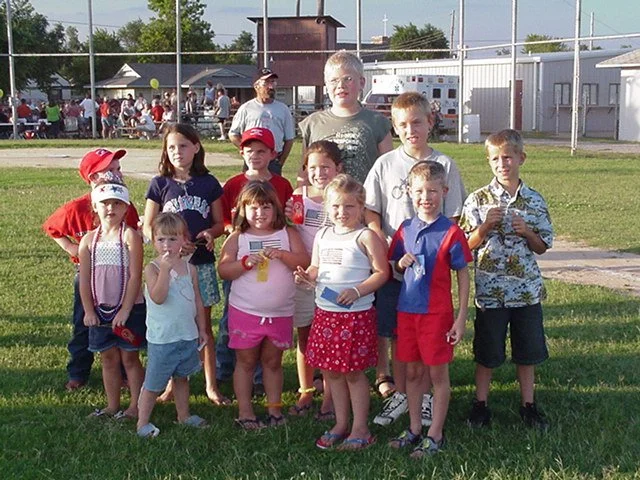
Me standing with other children at Garber’s Independence Day celebration with my 1st place ribbon. (Kevin Severin)
One of the funniest parts about attending a small school was how often the same handful of people appeared everywhere. The classmates sitting beside me during first-hour English were the same teammates on the academic team after lunch, the same musicians during band rehearsal and the same people warming up for basketball practice later that afternoon. We just kept changing uniforms.
There wasn't much room for specialization. If something needed to be done, somebody volunteered. Sometimes that somebody was you.
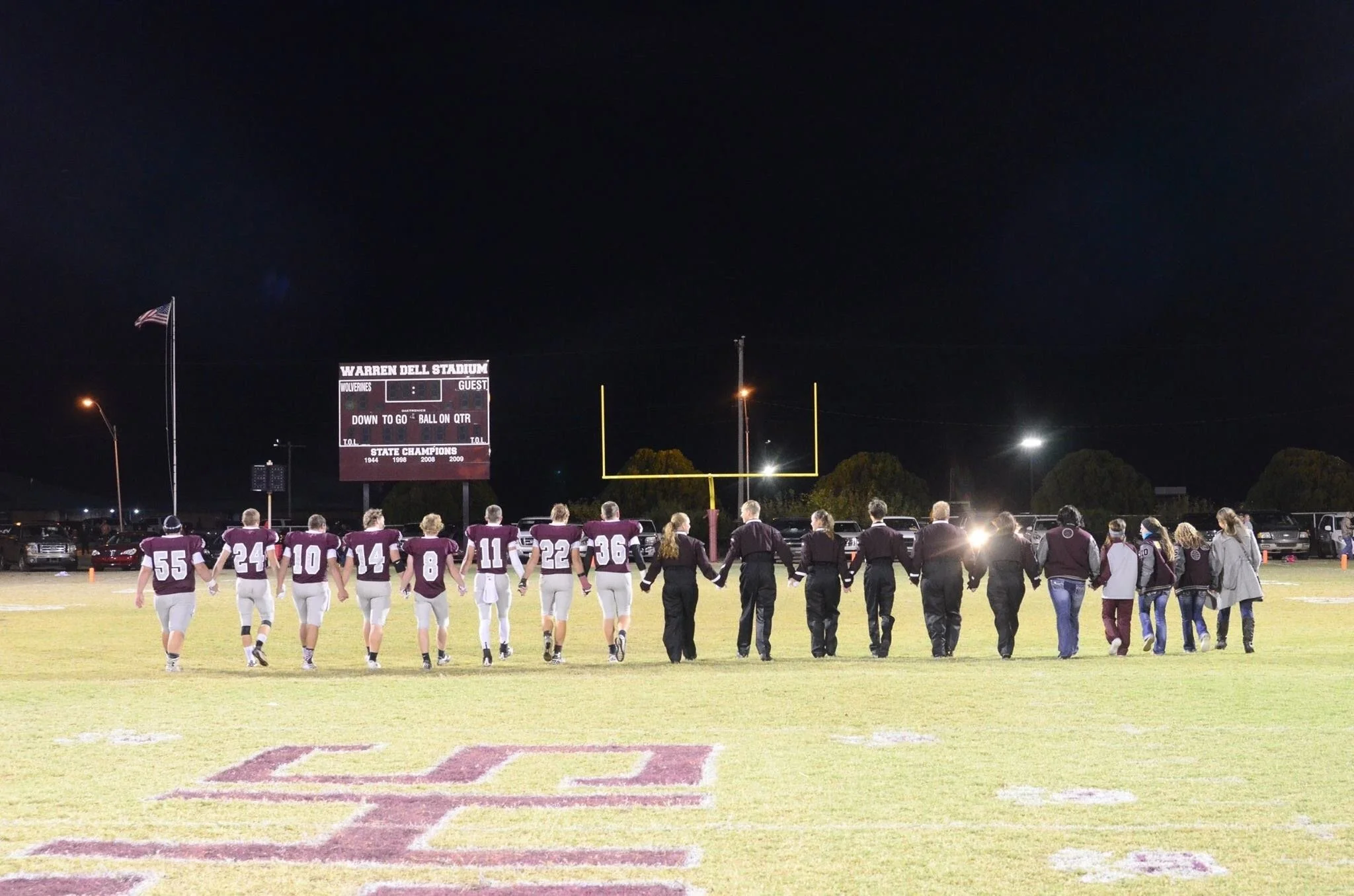
Me and my classmates participating in the ‘Senior Walk’ on Senior Night. (Kevin Severin)
Growing up on a farm also meant work arrived long before adulthood. My dad farmed wheat for a living, so I spent plenty of summers helping however I could. One of my favorite jobs was driving the combine during harvest. For anyone unfamiliar with farming, a combine is essentially several giant machines rolled into one. It cuts the wheat, separates the grain from the stalks and collects it into a storage tank, all while slowly crawling across the field.
Harvest season wasn't glamorous. Temperatures regularly climbed into the upper nineties. The days stretched ten hours or more. Dust found its way into places you didn't know dust could reach. I celebrated more than one birthday sitting inside the cab of a combine while endless rows of wheat disappeared behind me.
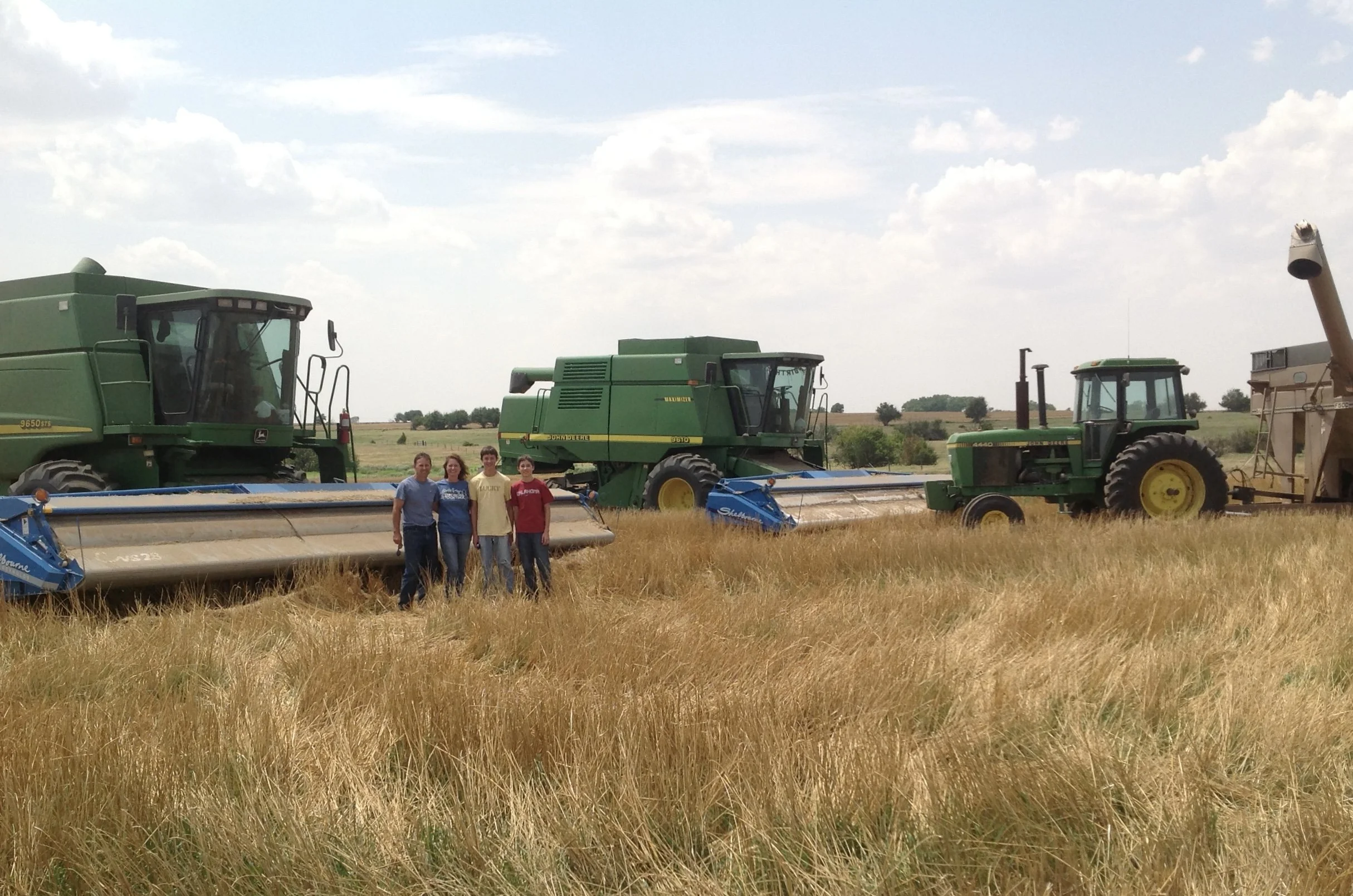
Me and my family surrounded by harvest equipment on a freshly cut wheat field. (Kevin Severin)
During middle school I also raised chickens, which was equal parts rewarding and chaotic. They each developed their own personalities. Some followed me around the yard. Others acted like tiny feathered bodyguards protecting the nesting boxes. Collecting eggs occasionally meant getting pecked by an especially determined mother hen who had decided I was the greatest threat to civilization.
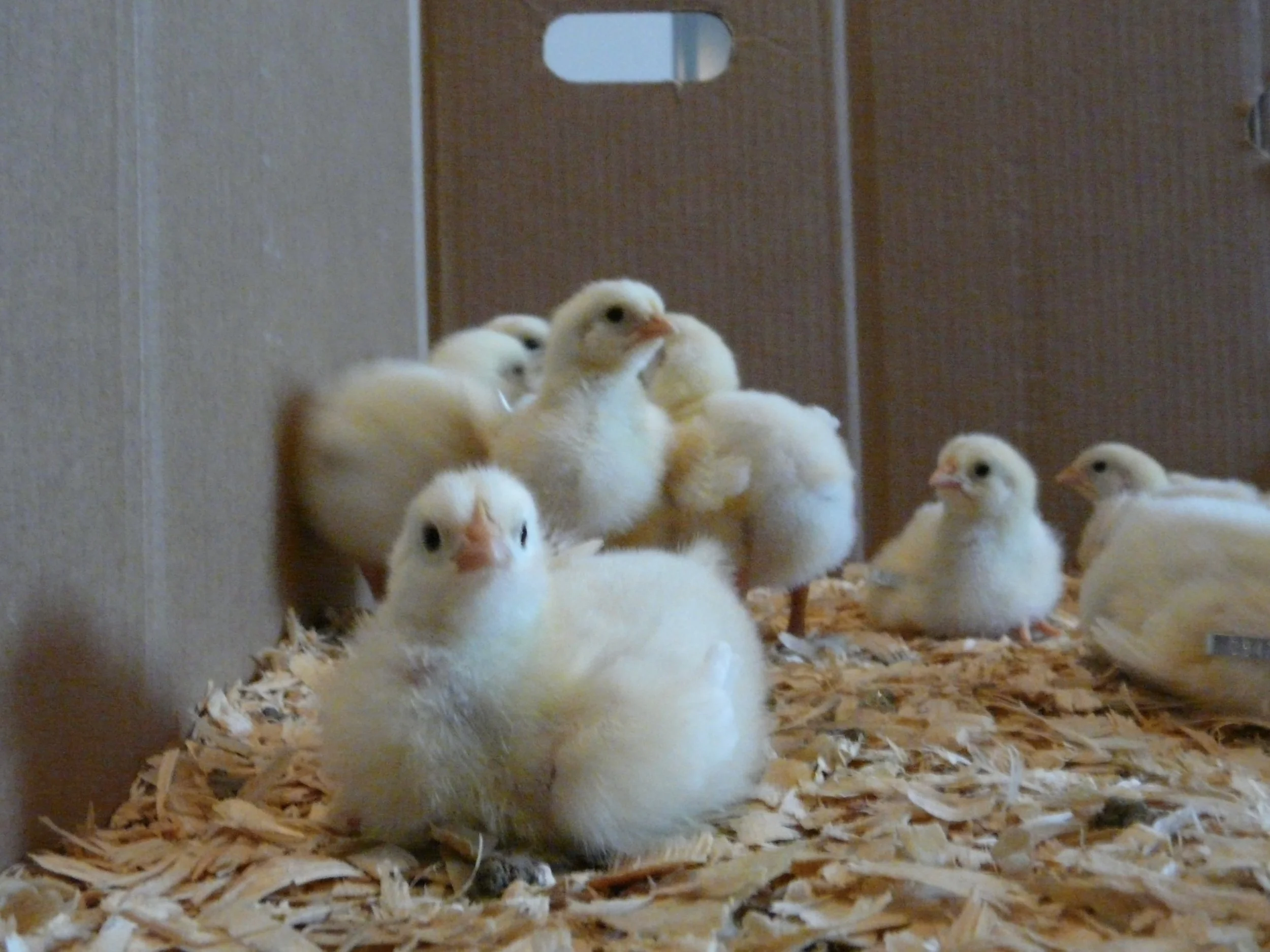
My broiler chicks that I raised to show at the Tulsa State Fair in High School. (Kevin Severin)
On especially hot afternoons, I'd run sprinklers near the coop so they could cool off. When one got sick, I'd sit with it and hope it recovered. Sometimes it did. Sometimes it didn't. Those moments taught me that caring for animals also means accepting that you can't control every outcome.
One evening I forgot to lock the chicken coop. It almost never happened, which probably explains why I remember it so clearly. During the night, a snake found its way inside and killed several of my chickens, including one of my favorites.
I was devastated. It wasn't just about losing an animal. It was realizing that responsibility doesn't take nights off. I learned that lesson much earlier than I expected, and I've carried it into almost every part of adulthood.
Freedom also looked different where I grew up. Entertainment rarely involved buying a ticket. We made our own.
We fished in the pond behind the house, rode bicycles across pasture roads, explored creek beds, and launched fireworks from the front yard without worrying about annoying nearby neighbors. There weren't fences separating every property line or rows of houses stacked side by side. After dark, the stars filled the sky. The kind of darkness that allowed you to see the arms of the Milky Way in its entirety.
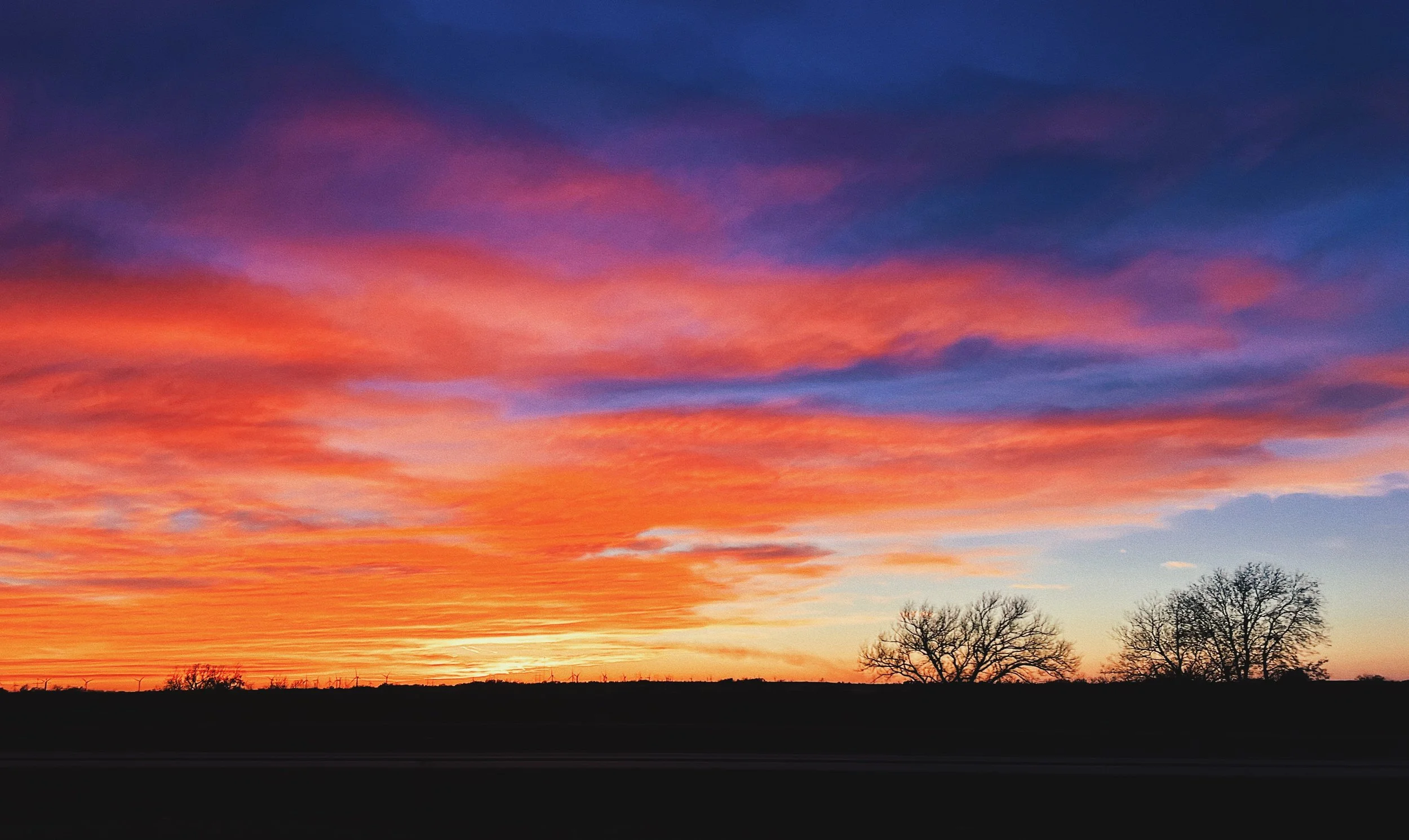
A typical sunset in Garber, Oklahoma. (Kevin Severin)
Of course, small towns aren't perfect. News travels faster than the internet ever could. If you sneezed on one side of town, someone on the other side might ask how you were feeling before dinner. Privacy has a shorter lifespan when everyone knows everyone else. Your successes are celebrated loudly, but your mistakes don't stay private for very long either.
There were practical limitations too. The nearest grocery store required planning. We didn't have movie theaters, bowling alleys or much nightlife to speak of. Going to a larger town felt like an adventure. Our local restaurant, the Country Cabin, was about as close as we came to dining out, and honestly, I thought it was fantastic.
Living in a place like that teaches accountability. People remember how you treat them. They notice whether you show up when someone needs help. Reputation isn't built through social media posts. It's built through years of ordinary interactions. Looking back, I think that's one of the greatest gifts my hometown gave me. It encouraged me to become someone others could depend on.
Growing up there also opened doors I might never have walked through somewhere else. I became valedictorian of my graduating class. I served as captain of the academic team. I led several student organizations. I earned All-State honors on the bassoon. In larger schools, it's easy to become one face in a crowd. In Garber, students were encouraged to try new things, not only for their own growth but also because every team, club and organization needed people willing to participate.
That environment rewarded curiosity. It taught me that leadership isn't reserved for the loudest person in the room. Often it's simply the person willing to raise their hand first.
Looking back now, I realize my hometown gave me far more than memories. It shaped my work ethic. It taught me responsibility before I had a driver's license. It taught me to appreciate ordinary moments, to care about my neighbors and to recognize that meaningful lives are usually built through small, consistent actions instead of dramatic ones.
Places really do create people. Not completely, of course. We all make our own choices. But our surroundings introduce us to certain values long before we're old enough to recognize them. Mine introduced me to early mornings, dirt roads, harvest seasons, Friday night lights, church pews filled with familiar faces and a community where showing up for one another wasn't considered extraordinary. It was simply expected.
So whenever John Mellencamp starts singing Small Town, I hear combines rolling through wheat fields. I hear fireworks on the Fourth of July. I hear basketball games where half the crowd knows someone. I hear the people who invested in me without asking for anything in return.
I don't live in Garber anymore, and life has carried me far beyond those gravel roads. Still, every place I've gone has been shaped in some way by where I started.
I was born in a small town. More importantly, I was raised in the country. And after all these years, I'm thankful for what those places made me.