
Sam Presti and the Art of Trusting the Process
The Thunder are one win away from the Finals again, and the city feels united behind them. It’s us against everyone. National analysts still hesitate to fully buy in. Fans from larger markets still talk about Oklahoma City like it’s a temporary basketball experiment. And that chip on the shoulder makes this whole thing even more fun.
What surprises me most is how emotionally invested I’ve become in this team. I wasn’t always a Thunder fan.
Growing up, I was actually an Orlando Magic fan. Part of it came from the fact that little kid me thought Dwight Howard was basically a real-life superhero. I respected the early Thunder teams, but I never fully connected with them the way everyone else around me seemed to.
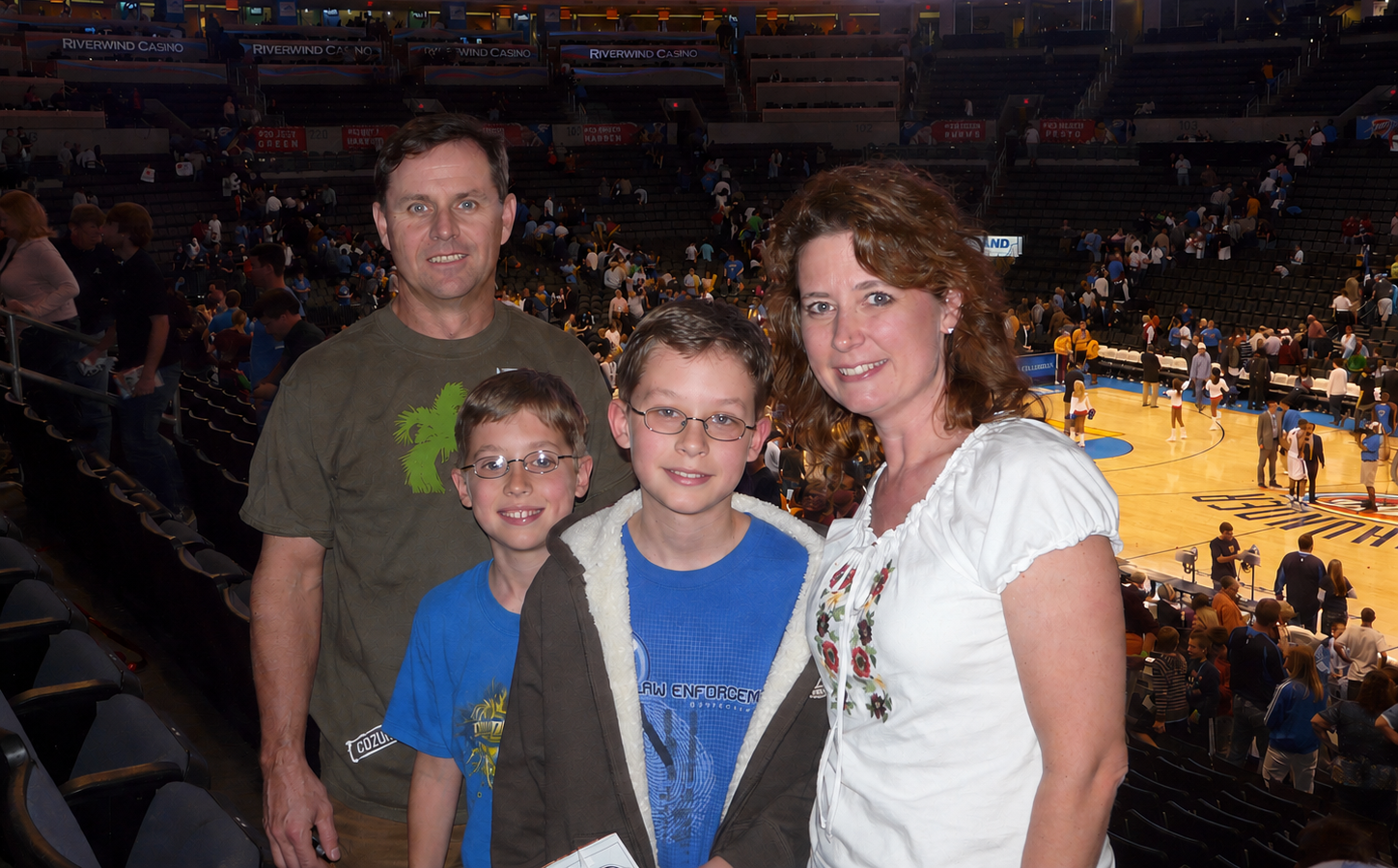
Me with my family at an Orlando Magic–Oklahoma City Thunder game at the then-Ford Center in Oklahoma City. (Kevin Severin)
Kevin Durant, Russell Westbrook and James Harden were incredible. Historically incredible. But their rise felt sudden. One day the Thunder were rebuilding, and the next they were in the Finals with three future MVPs flying around the court like a basketball cheat code.
It almost felt accidental. Of course, it wasn’t actually accidental. Sam Presti drafted brilliantly. The organization made smart moves. But as a fan watching from the outside, it felt like lightning struck all at once. The talent arrived before the identity did. This current era feels completely different.
Back then, it felt like the OKC Thunder stumbled into greatness. This time, it feels earned. And that difference starts with Sam Presti.
Presti has become something rare in modern sports: a person willing to think long-term in a culture obsessed with shortcuts. Every year, teams convince themselves they’re one desperate trade away from relevance. Owners panic and front offices mortgage their future for aging stars. Fan bases demand immediate results like sports franchises are Amazon Prime deliveries. Presti resisted all of it.
While people mocked the rebuild, the Thunder stayed patient. They collected draft picks like a doomsday prepper stockpiling canned food. Every national broadcast joked about “all those future first-round picks,” as if Oklahoma City was just hoarding assets for fun instead of building something sustainable.
James Clear reminds us that “You do not rise to the level of your goals. You fall to the level of your systems.” Long-term success rarely comes from a single breakthrough. it comes from showing up, making good decisions and trusting the process long before the results appear. The people who think furthest ahead are often the ones willing to wait the longest.
There were nights when the rebuild looked ugly. There were stretches where the Thunder roster looked like a 2K franchise mode after the salary cap breaks. At one point I’m pretty sure half the country thought Presti was drafting players based solely on wingspan and vibes.
But underneath all of it, there was a philosophy. Development mattered and character mattered and chemistry mattered. The Thunder weren’t trying to assemble a roster of famous names. They were trying to build an ecosystem where players could actually grow. And now you can see the results everywhere.
Shai Gilgeous-Alexander plays with the patience of someone moving through traffic. Chet Holmgren somehow looks both awkward and unstoppable at the same time. Jalen Williams plays with a confidence that feels impossible to teach.
These players were developed, not purchased. That distinction matters to me more now than it used to.
Anyone can admire a superteam thrown together overnight. It’s harder not to respect a group that became elite through years of intentional growth. You can feel the difference watching them play. The ball moves, the defense rotates and everyone trusts each other.
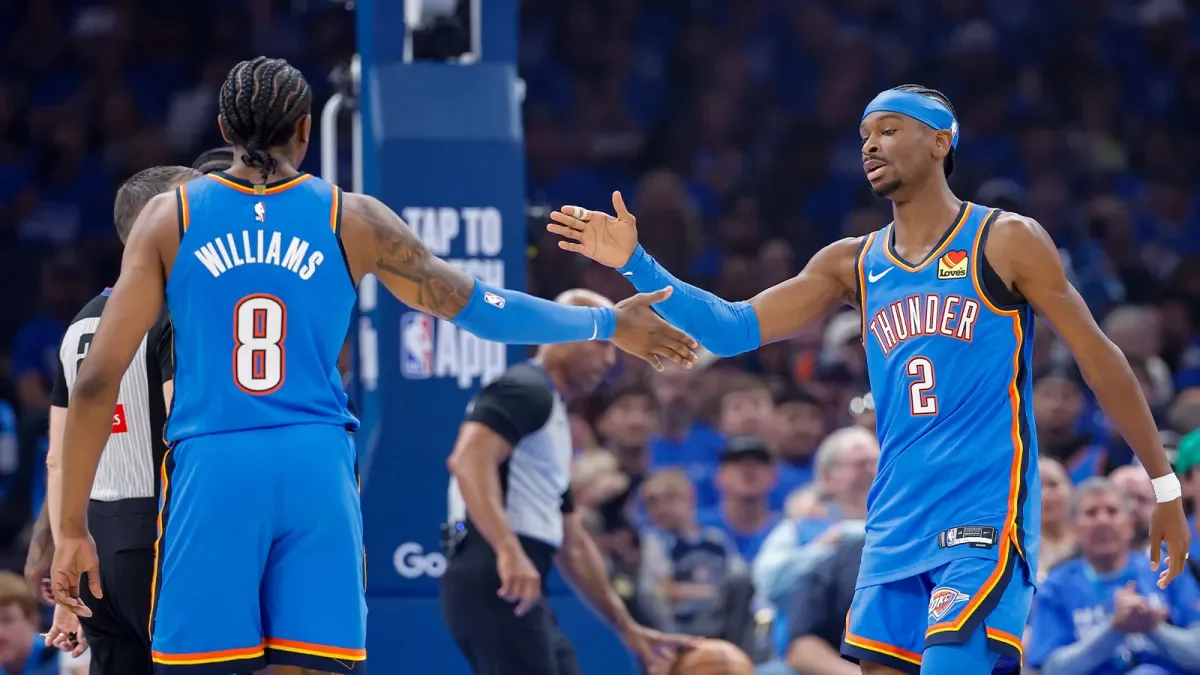
Jalen-Williams and Shai-Gilgeous-Alexander playing for the Oklahoma City Thunder. (Sports Illustrated)
Ironically, the moment everything clicked for me happened during a game against the Lakers last season.
At first, I went for LeBron. I grew up watching LeBron James dominate the league, reinvent himself, break records and survive every sports debate known to mankind. At the time, I thought it could end up being his final season. I figured I owed it to my childhood self to see him play in person one more time.
From the opening quarter, the energy inside the arena felt different. Loud in a way that rattled your chest. Every defensive stop felt important. Every fast break felt dangerous. The crowd wasn’t just entertained — they believed. The Thunder played with the confidence of a team that already knew where it was headed. Meanwhile the Lakers looked older, slower and disconnected. Even LeBron, still brilliant, felt like he was carrying the weight of time itself on his shoulders.
I remember sitting there midway through the game realizing I had stopped watching LeBron entirely. I was watching the Thunder. Watching the way Shai controlled the pace. Watching the crowd erupt after hustle plays in February like it was Game 7. Watching a young team carry itself like it belonged on the biggest stage.
And during that game, a thought hit me: This team can actually win the championship. Not in a cute “future is bright” way. Not in a “they’ll be dangerous someday” way. I mean genuinely win the whole thing.
A few months later, they did.
Game 7 felt less like a basketball game and more like Oklahoma City collectively holding its breath for three hours. Every possession felt enormous. I don’t think I sat down for the entire fourth quarter. Nobody around me did either. The emotional weight of that moment was impossible to ignore. Years of patience and rebuilding and being overlooked. Years of national media acting surprised anytime Oklahoma City succeeded at anything. And then suddenly, it all paid off at once.
The energy inside and outside the arena was electric. I was outside the arena when the Thunder were announced the winners and the crowd took to the streets. People screamed and climbed light poles. Car horns echoed through downtown for hours. Someone ran past me waving a Thunder flag like Oklahoma had just gained independence.
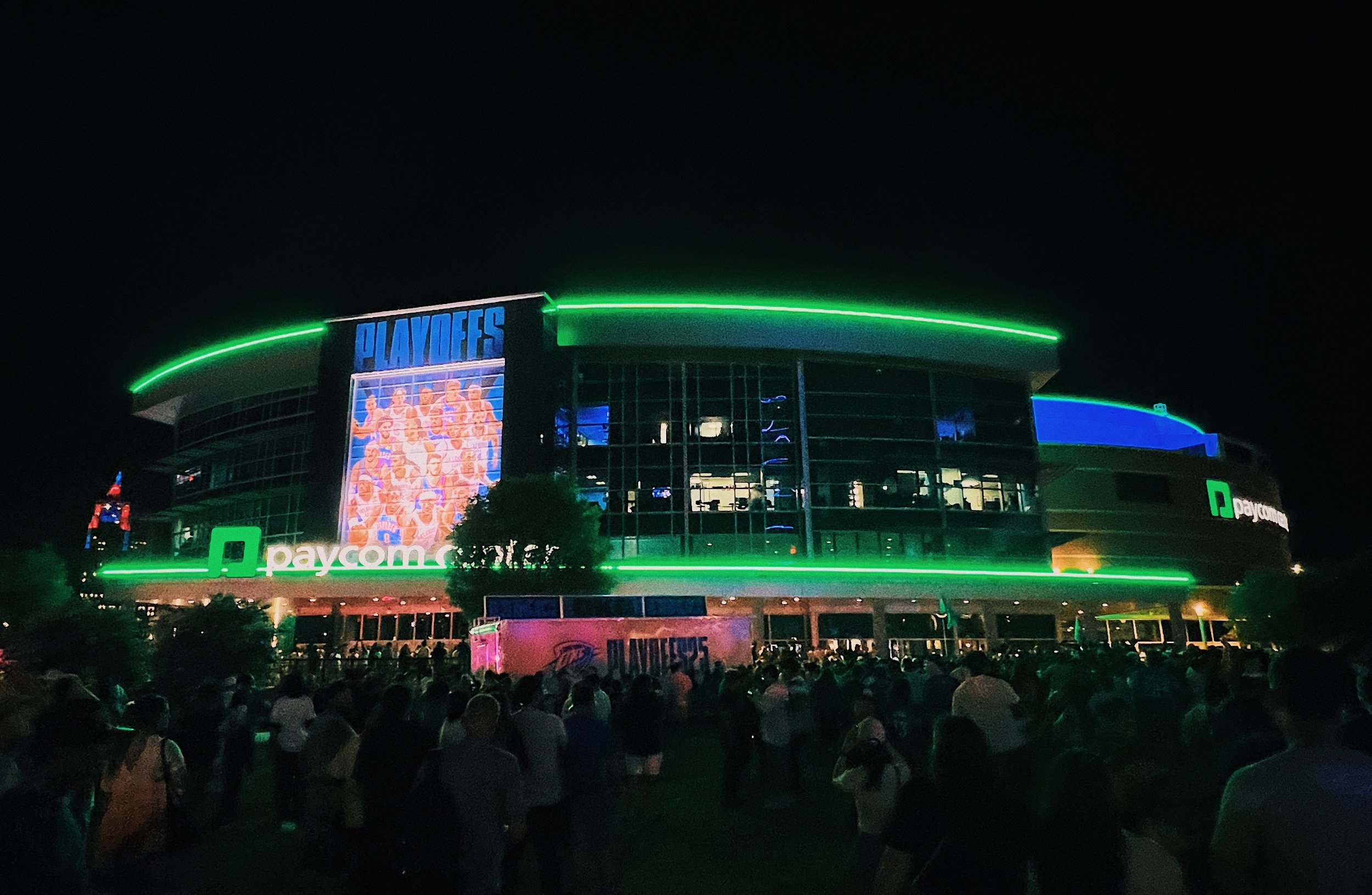
The Paycom Center surrounded by fans at Game 7 of the NBA Finals. (Kevin Severin)
For one night, the entire city felt connected. That’s the thing sports can do sometimes when everything aligns correctly. They turn strangers into community. But what I keep thinking about now isn’t just the championship itself. It’s the road that led there.
Modern culture trains us to chase immediate results. Everyone wants the montage without the years nobody sees. We celebrate outcomes while ignoring the process that created them. The Thunder rejected that mindset entirely. They trusted development over shortcuts.
And I think that’s why this team resonates with so many Oklahomans right now. On some level, everyone understands how difficult patience has become. It’s hard to keep building when results aren’t immediate. It’s hard to trust long-term vision when the world constantly demands instant proof.
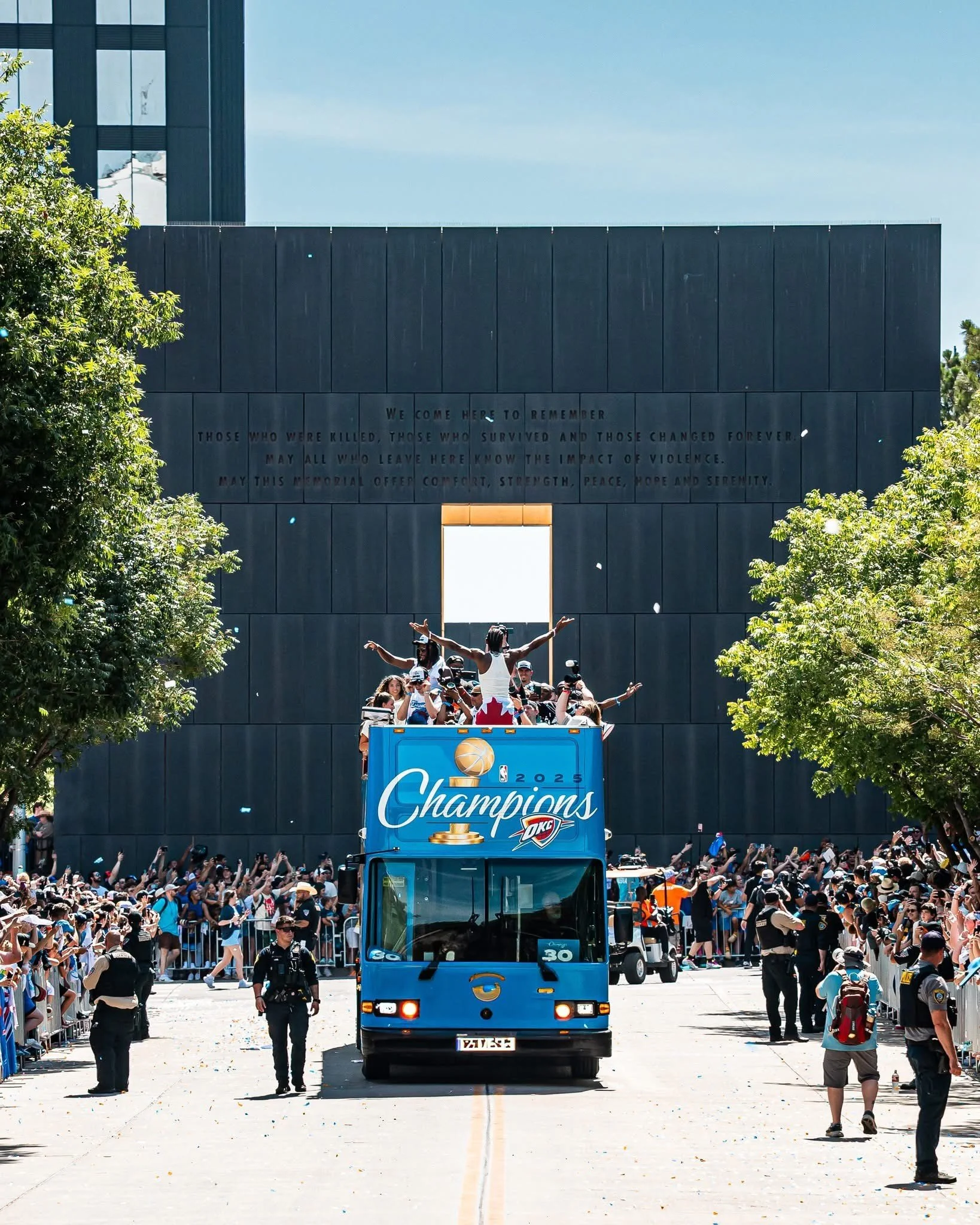
Oklahoma City Thunder players aboard a bus during the 2025 OKC Thunder Championship Parade with the Oklahoma City Memorial in the background. (Jimmy Do)
The Thunder remind us that meaningful things usually take time.
Chemistry takes time. Leadership takes time. Growth takes time. And sometimes the process itself becomes the reward.
Even this season feels like a continuation of last year’s foundation. For the first time in a long time, OKC built something people genuinely believe in. That matters more than banners.
Funny enough, I walked into that Lakers game as someone simply hoping to see LeBron one last time. I walked out realizing my allegiance had changed completely.
And as long as Sam Presti is leading the charge, I’m probably never going back.